
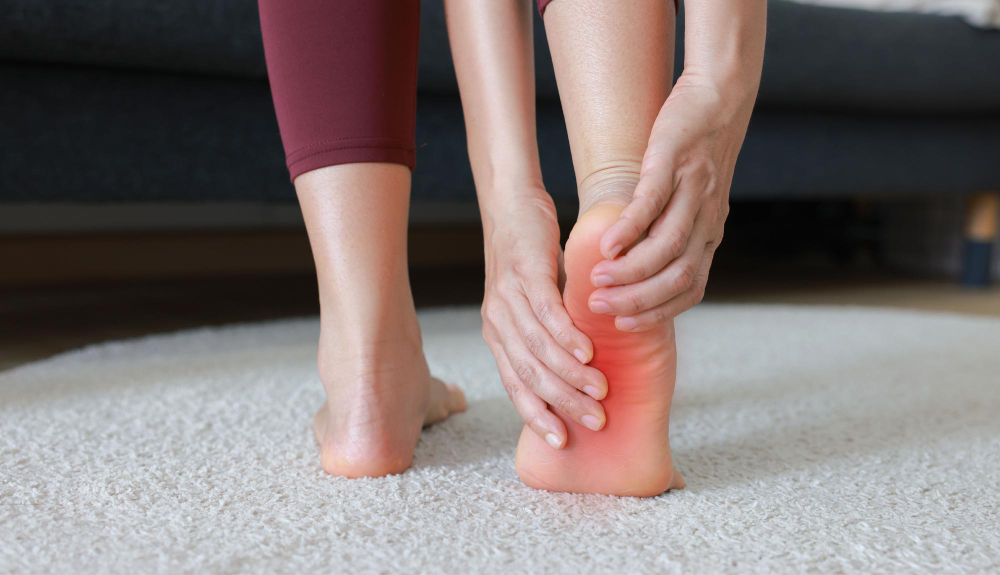
 Heel Pain Should Not Control Your Day
Plantar fasciitis can make the first steps in the morning painful, limit your walking, interrupt running, and make long workdays uncomfortable. If stretching, rest, new shoes, or rolling your foot on a ball only gives temporary relief, it may be time for a more complete evaluation.
Active Chiropractic helps patients in Alpharetta with plantar fasciitis, heel pain, arch pain, and stubborn foot irritation. Dr. Jason Pease evaluates the foot, ankle, calf, hip, and movement patterns that may be contributing to the problem, then builds a treatment plan that may include chiropractic care, soft tissue therapy, mobility work, strengthening exercises, and shockwave therapy when appropriate.
Schedule a Plantar Fasciitis Evaluation
What Is Plantar Fasciitis?
Plantar fasciitis is irritation of the thick band of connective tissue that supports the arch of the foot. It often causes pain near the heel or along the bottom of the foot, especially with the first steps after getting out of bed, after sitting, or after long periods of standing or activity.
Many patients think plantar fasciitis is only a foot problem. In reality, heel pain can be influenced by calf tightness, ankle mobility, hip control, training load, footwear, work demands, running mechanics, or repetitive stress.
Common Symptoms
Plantar fasciitis symptoms may include:
- Sharp heel pain with the first steps in the morning
- Pain after sitting and then standing up
- Heel or arch pain after long walks
- Pain that worsens after running or exercise
- Tightness through the calf or bottom of the foot
- Pain when standing for long periods
- Tenderness near the inside of the heel
- Recurring flare-ups that improve briefly and then return
Why Plantar Fasciitis Keeps Coming Back
Plantar fasciitis often becomes chronic when treatment focuses only on the painful spot. Stretching the foot may help, but it may not be enough if the underlying drivers are still present.
Common contributors include:
- Limited ankle mobility
- Calf tightness or weakness
- Foot and arch control issues
- Hip weakness or poor lower-body mechanics
- Rapid increases in walking, running, or standing volume
- Worn-out or poorly matched footwear
- Training through pain without modifying load
- Lack of progressive strengthening
The goal at Active Chiropractic is to understand why the plantar fascia is irritated and what needs to change so the pain does not keep returning.
How Active Chiropractic Treats Plantar Fasciitis
Evaluation
Dr. Pease will review your symptoms, activity level, footwear, work demands, exercise routine, and what you have already tried. He may evaluate foot and ankle mobility, calf flexibility, lower-leg soft tissue irritation, gait or loading patterns, and related areas such as the knee, hip, and low back.
Chiropractic and Joint Mobility Care
When joint restrictions are contributing to poor movement or compensation, chiropractic care may be used to improve mobility and reduce mechanical stress. This may include work on the foot, ankle, knee, hip, pelvis, or spine depending on the findings.
Soft Tissue Therapy
Soft tissue therapy may be used to address irritated or restricted tissue in the plantar fascia, calf, Achilles region, and surrounding areas. The goal is to reduce tension, improve tissue tolerance, and support better movement.
Shockwave Therapy
Shockwave therapy may be recommended for chronic plantar fasciitis or heel pain that has not responded well to rest, stretching, shoe changes, or basic home care. It uses acoustic energy targeted to the irritated tissue and is often paired with mobility and strengthening work.
Corrective Exercises
Exercises may focus on foot strength, calf capacity, ankle mobility, hip control, and gradual return to walking, running, or sport. The right exercise plan depends on your symptoms and activity goals.
Shockwave Therapy for Plantar Fasciitis in Alpharetta
Shockwave therapy can be a valuable option for stubborn plantar fasciitis because it targets the irritated tissue directly. Patients often consider shockwave when heel pain has lasted for weeks or months, or when pain improves temporarily but returns as soon as activity increases.
At Active Chiropractic, shockwave therapy is not used as a stand-alone gimmick. It is part of a broader treatment plan that may include soft tissue therapy, joint mobility work, calf and foot strengthening, and activity modification.
Plantar Fasciitis for Runners and Active Adults
Runners, walkers, lifters, golfers, coaches, and active adults often struggle with plantar fasciitis because they do not want to stop moving. Rest may calm symptoms temporarily, but pain often returns when mileage, walking, or standing time increases again.
Active Chiropractic helps active patients find a realistic plan. That may include modifying training volume, changing intensity, adjusting footwear strategy, improving calf and foot strength, and using treatment to support recovery while maintaining as much activity as possible.
When to Get Evaluated
You should consider scheduling an evaluation if:
- Heel pain has lasted more than two weeks
- The first steps in the morning are painful
- Pain returns every time you increase walking or running
- You have tried stretching, ice, rolling, or shoe changes without lasting improvement
- You are limping or changing how you walk
- Heel pain is affecting work, exercise, or daily life
- You want to avoid the cycle of resting, returning, and flaring up again
What to Expect at Your First Visit
Step One: Identify the Irritated Tissue
Dr. Pease will determine whether your symptoms are consistent with plantar fasciitis and whether other issues may be contributing to the pain.
Step Two: Find the Contributing Factors
The evaluation looks beyond the heel. Foot mechanics, ankle motion, calf tension, hip control, training load, and footwear can all matter.
Step Three: Start a Practical Plan
Your treatment plan may include chiropractic care, soft tissue therapy, shockwave therapy, home exercises, activity modification, and follow-up care based on your goals.
Frequently Asked Questions
Is plantar fasciitis only a foot problem?
Not always. The plantar fascia is in the foot, but heel pain can be influenced by the ankle, calf, hip, low back, footwear, training load, and how you move.
Can a chiropractor help plantar fasciitis?
Chiropractic care may help when plantar fasciitis is connected to joint mobility, soft tissue irritation, lower-body mechanics, or movement compensation. Active Chiropractic evaluates the full chain instead of only treating the heel.
Does shockwave therapy help plantar fasciitis?
Shockwave therapy may help some patients with chronic plantar fasciitis or stubborn heel pain, especially when combined with mobility work, strengthening, and activity modification.
Should I stop running if I have plantar fasciitis?
Not always, but your running may need to be modified. Some patients need a temporary reduction in mileage, speed, hills, or frequency while treatment and strengthening improve tissue tolerance.
What shoes may help with plantar fasciitis?
The right shoe depends on your foot, activity, symptoms, and training demands. Some patients benefit from more support, while others need strength and mobility work more than a different shoe.
Where is Active Chiropractic located?
Active Chiropractic is located at 3586 Old Milton Pkwy, Alpharetta, GA 30005. The office serves Alpharetta, Milton, Johns Creek, Roswell, Windward, and nearby North Fulton communities.
Ready to Take the Next Step Toward Heel Pain Relief?
If plantar fasciitis is limiting your walking, running, workday, or workouts, schedule an evaluation at Active Chiropractic. Dr. Pease will help determine what is causing your heel pain and whether chiropractic care, shockwave therapy, soft tissue treatment, or a rehab plan is right for you.
Schedule an appointment online or call 678-379-7141.